Michigan Home Help Program 2026: Who Qualifies, How to Apply & How to Get Paid
Maybe it started quietly.
A phone call from a neighbor. A doctor using words like "supervision" and "daily assistance." Or you visited home and — without saying a word to anyone — moved a few things you realized had become dangerous.
You didn't panic. You just started carrying something heavier.
If you're the person in the family who holds all of this together — who researches solutions at midnight, who shows up when it's hard, who refuses to just put someone in a facility without exhausting every other option first — this guide is written for you.
Michigan's Home Help Program will pay for that in-home care through Medicaid. In many cases, it will pay you to provide it. Most families who need it have no idea it exists.
Here's everything you need to know — including what changed in 2026, the exact numbers, and how to apply today.
Quick answer:The Michigan Home Help Program is a Medicaid-funded program run by MDHHS. It pays for personal care services — bathing, dressing, meals, and more — so eligible residents can stay home instead of entering a nursing facility.
The Michigan Home Help Program (sometimes called MDHHS Home Help or DHS Home Help) provides non-medical personal care for people who need hands-on help with everyday activities. It is administered by the Michigan Department of Health and Human Services (MDHHS) and funded through Medicaid.
The program serves residents of any age — not just seniors. Adults with disabilities, chronic conditions, or physical limitations can qualify just as readily as older adults.
MDHHS runs the official program website at michigan.gov/homehelp. Questions? Call MDHHS directly at 800-979-4662.
Who Qualifies for the Michigan Home Help Program in 2026?
Quick answer:You need to meet two requirements: financial eligibility (income and assets below set limits) and functional eligibility (documented need for help with daily tasks).
Financial Eligibility — 2026 Limits
Eligibility Factor
2026 Limit
Monthly income — adult (Healthy Michigan Plan)
Up to ~$1,835/month
Asset limit — single applicant
$9,950 in countable assets
Asset limit — married couple
$14,910
Home equity limit (long-term care programs)
$752,000
What does NOT count as an asset:
Your primary home
One vehicle
Household furniture and appliances
Personal clothing and belongings
Most families who assume they don't qualify actually do once these exemptions are factored in. The only way to know for sure is to apply.
Functional Eligibility
You must show documented difficulty with at least one Activity of Daily Living (ADL). These are basic self-care tasks:
Bathing or showering
Dressing and undressing
Eating
Moving around inside your home
Transferring (such as moving from bed to a chair)
Toileting
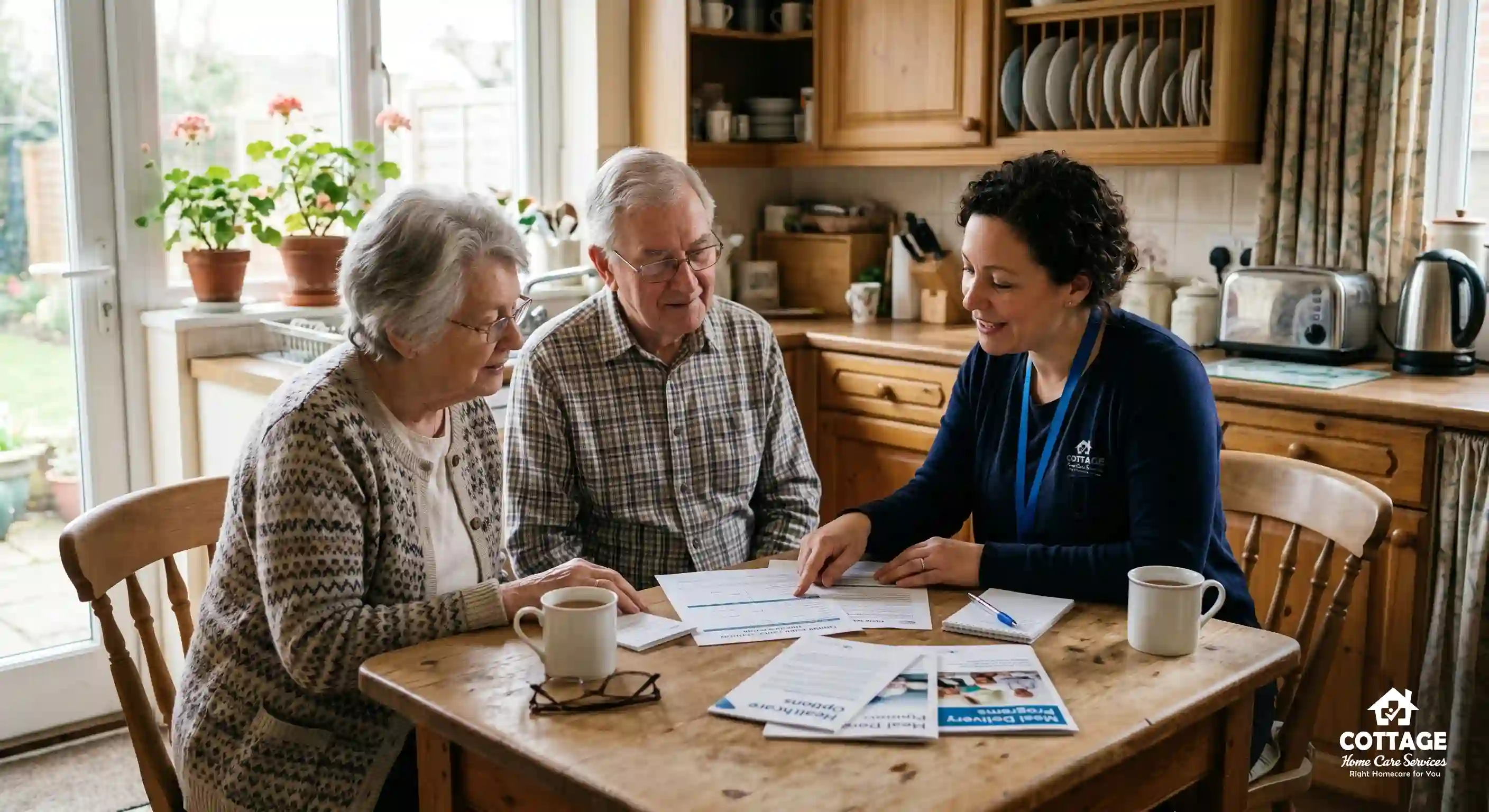
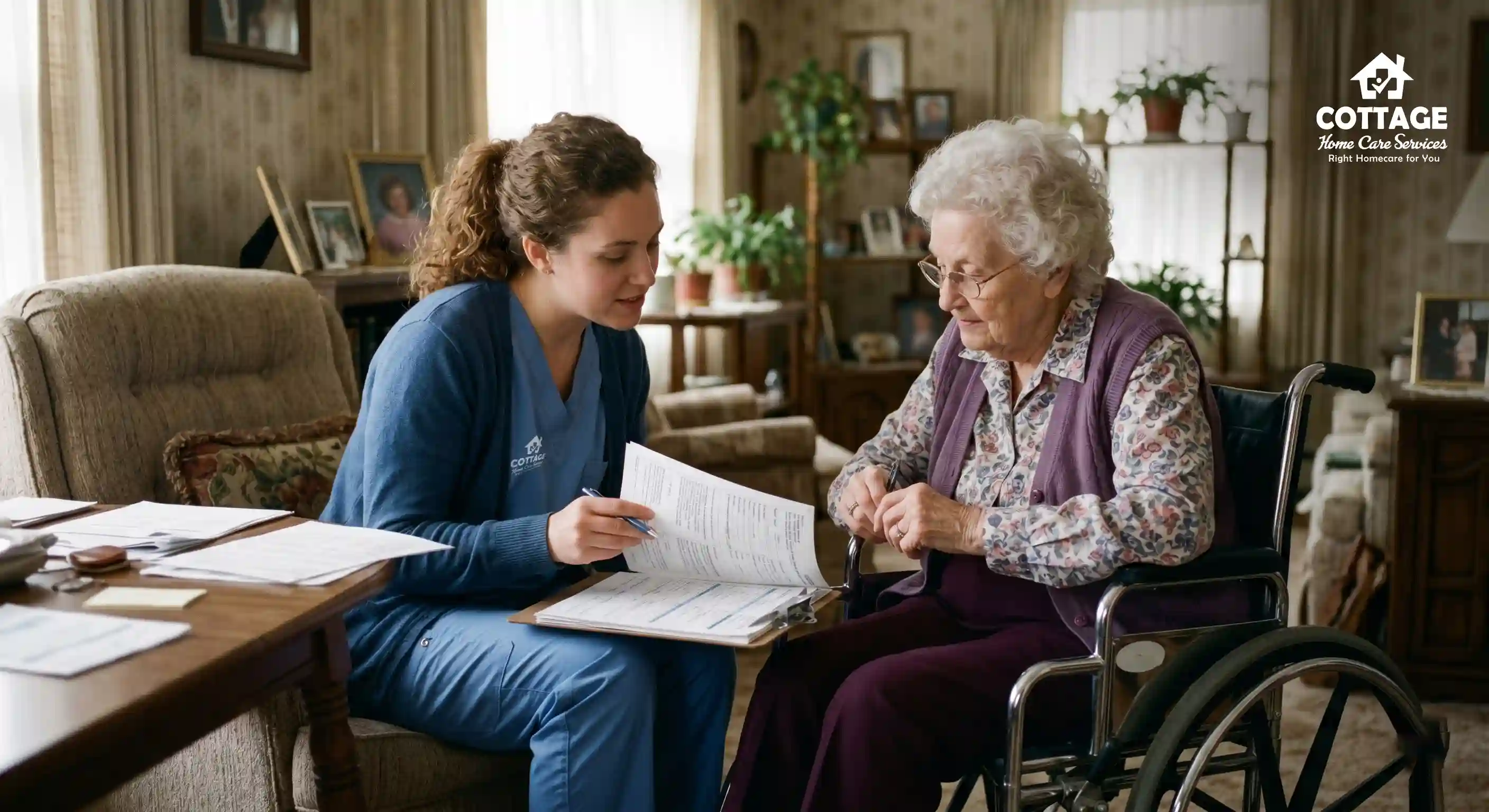
An MDHHS Adult Services Worker (ASW) will schedule a home visit and conduct a Comprehensive Assessment to evaluate your needs. Having your doctor or a family member present makes this go faster.
What Services Does the Michigan Home Help Program Cover?
Quick answer:Home Help covers non-medical personal care — bathing, dressing, meal prep, light cleaning, grocery shopping, and some complex care tasks like wound care.
Personal Care (ADLs)
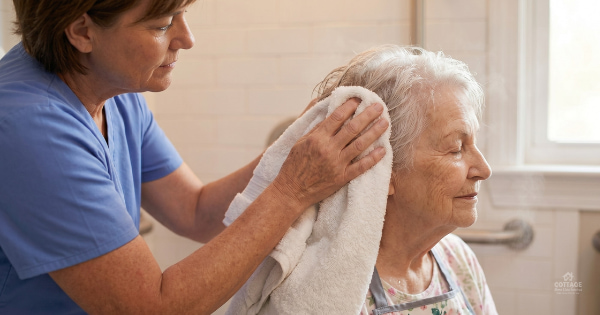
Bathing and personal hygiene
Dressing and undressing
Eating assistance
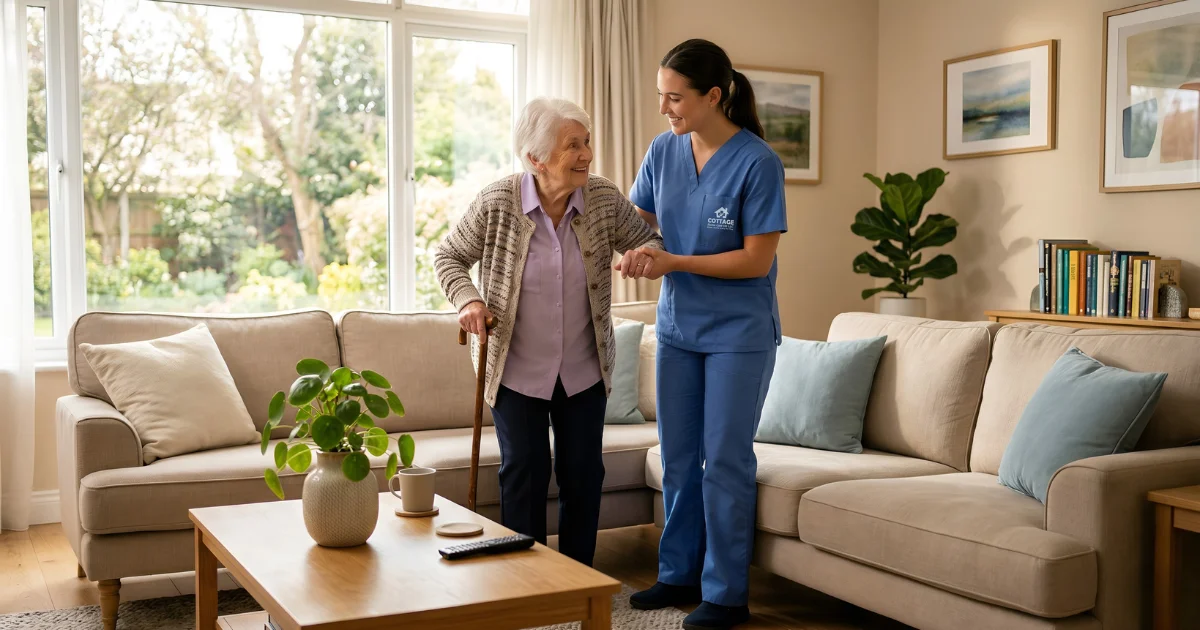
Mobility and transfers
Toileting support
Household Support (IADLs — Instrumental Activities of Daily Living)
Meal preparation and cleanup
Light housekeeping and laundry
Grocery shopping for essential items
Medication reminders
Complex Care (for those who need it)
Catheter and colostomy care
Wound care
Range-of-motion exercises
Respiratory treatment and ventilator support
Specialized skin care
What it does NOT cover:Home Help is not home health. Skilled nursing, physical therapy, and medical procedures fall under a separate Medicaid Home Health benefit. The two programs serve different needs.
Can a Family Member Get Paid as a Caregiver?
Quick answer:Yes. A non-spouse family member — adult child, sibling, niece, nephew — or a qualifying friend can be enrolled as a paid caregiver through the Michigan Home Help Program.
This is the question that surprises families the most.
The program allows care recipients to hire and manage their own caregiver. That person can be a relative or friend, as long as they are:
At least 18 years old
Not the care recipient's spouse
Not a parent caring for a minor child under 18
Enrolled in CHAMPS (Community Health Automated Medicaid Processing System)
Cleared through a criminal history background check
Adult children are the most common family caregivers under this program. If you are already providing unpaid care for a parent or sibling right now, you may be leaving money on the table.
How Much Do Michigan Home Help Caregivers Get Paid in 2026?
Quick answer:As of January 1, 2026, the total individual caregiver rate is $17.13 per hour — not just the minimum wage.
Per MDHHS Numbered Letter L-25-75, the rate is made up of two components:
Component
Rate
Base minimum wage (2026 state rate)
$13.73/hour
Direct Care Worker (DCW) premium pass-through
+$3.40/hour
Total individual caregiver rate
$17.13/hour
The county where the care recipient lives determines the exact rate — so a caregiver in Oakland County may be paid slightly differently than one in Genesee County.
Agency-based caregivers may receive rates at or above this figure depending on the certified agency they work through.
To confirm your county-specific rate, call MDHHS at 800-979-4662 or speak with a CHAMPS-certified agency like Cottage Home Care MI.
What Changed in the Michigan Home Help Program in 2026?
Quick answer:Three major changes took effect in 2026 — a new medical certification form (MDHHS-6200), strict EVV enforcement, and an updated total caregiver pay rate of $17.13/hour.
1. New Medical Certification Form: MDHHS-6200
MDHHS replaced the old DHS-54A medical needs form with a new one: MDHHS-6200.
This form must be completed and signed by a Medicaid-enrolled provider — a physician, nurse practitioner, physician assistant, or licensed therapist. Without it, your application will be returned or delayed.
If your paperwork still uses DHS-54A, start over with the new form. Get MDHHS-6200 from your local MDHHS office or at michigan.gov/adultservices.
2. EVV Is Now Mandatory — April 2026 and Beyond
Electronic Visit Verification (EVV) is no longer optional. Starting April 2026, every Home Help visit must be verified electronically for claims to be processed.
Caregivers use the HHAeXchange+ mobile app or a telephony system to clock in at the start of each visit and clock out when they finish. Skipping this step means the visit does not get paid. No exceptions.
Live-in caregiver exemption:If you live in the same home as the person you care for, MDHHS allows an EVV exemption. You are not required to clock in and out for every task using the app. You must, however, submit an approved live-in caregiver verification form through your MDHHS worker or certified agency. Ask Cottage Home Care MI about this exemption at (313) 762-4272.
3. Updated Caregiver Pay Rate
The individual caregiver base rate increased to $13.73/hour on January 1, 2026, in line with Michigan's new state minimum wage. This affects all individual (non-agency) Home Help providers.
What Did NOT Change
Program eligibility criteria remain the same
Spouses and parents of minors are still ineligible as paid caregivers
CHAMPS enrollment is still required before any caregiver receives payment
The two-track application process (MI Bridges or MDHHS office) stays the same
How to Apply for the Michigan Home Help Program — Step by Step
1
Check your eligibility
Review the 2026 income and asset limits in the table above. If you're close to the threshold, apply anyway. An intake counselor at Cottage Home Care MI can do a free eligibility review before you spend time on paperwork — call (313) 762-4272.
2
Get the right forms
You'll need:
The Adult Services Application (available at michigan.gov/adultservices or your local MDHHS office)
The new MDHHS-6200 medical certification form (completed by your doctor or NP)
Proof of Michigan residency
Proof of income (Social Security letter, pay stubs, pension statement)
Proof of Medicaid or Medicaid application confirmation
Mail applications to: MDHHS Adult Home Help, PO Box 26007, Lansing, MI 48909. Fax PSVs to 517-763-0111.
4
Complete the home assessment
An MDHHS Adult Services Worker will contact you to schedule a home visit. They'll conduct a Comprehensive Assessment to determine your level of need. Have your medical records handy and, if possible, have a family member present.
5
Choose your caregiver
Once approved, you can choose a family member or a professional caregiver from a Medicaid-certified agency. The caregiver must be enrolled in CHAMPS and pass a background check before services begin.
Agency vs. Independent — what's the real difference? If you register as an independent provider, you handle your own taxes, CHAMPS compliance, and EVV troubleshooting. When you register through a certified agency like Cottage Home Care MI, the agency manages payroll paperwork, tracks EVV compliance, and ensures you receive your full $17.13/hour (or higher agency rates) without delays or administrative headaches.
6
Set up EVV and begin care
Your caregiver downloads the HHAeXchange+ app and completes EVV training. Once that's done, services can start and payments begin processing.
Typical timeline: 30 to 60 days from application to first approved service.Start early.
Michigan Home Help vs. Other Care Options
Families often compare Home Help with other care options before deciding. Here's how they stack up:
Care Type
Avg. Monthly Cost
Medicaid?
Stay Home?
Michigan Home Help
$0 if eligible
Yes
Yes
In-home private pay care
$4,000–$6,500
No (or partial)
Yes
Assisted living (Detroit area)
~$5,949/month
Partial
No
Nursing home (Michigan)
~$10,798/month
Yes (separate)
No
Adult day health care
~$9,750/month
Limited
Partial
For families who qualify, Home Help is the only option where care is provided at home and the cost is covered by Medicaid. That's a significant financial difference.
Common Mistakes That Delay Michigan Home Help Applications
Using the old DHS-54A form
This form is no longer accepted. Use MDHHS-6200 from the start.
Assuming assets are too high
Your home, car, and household items don't count. Most families qualify after these exemptions.
Choosing a spouse as the paid caregiver
Spouses are not eligible. Choose another qualifying adult.
Not setting up EVV before care starts
Caregivers who skip the HHAeXchange+ app don't get paid for those hours. Set it up before the first visit.
Waiting until a crisis
Applications take 30–60 days. If your loved one needs care now, apply today — not when a hospital discharge forces a decision in 48 hours.
Picking an agency that doesn't serve your county
Many Michigan agencies only serve 5–10 counties. Cottage Home Care MI serves all 83 — from Wayne County to Alger County, Kalamazoo to Keweenaw.
How Cottage Home Care MI Helps Michigan Families
Cottage Home Care MI LLC is a Medicaid-certified, MDHHS-approved, CHAMPS-certified home care agency based in Detroit, Michigan. The parent company — Cottage Home Care — has served families since 1992. The Michigan operation opened in 2026 as its sister company.
What sets them apart from other agencies:
All 83 Michigan counties — from Detroit's Wayne County to the Upper Peninsula
Multilingual and culturally matched caregivers — a real advantage for families who speak Caribbean English, Spanish, Arabic, and other languages
Flexible scheduling including extra free hours for qualifying clients
Both Medicaid and private pay — so families who don't qualify for Medicaid still have a path to care
Free intake consultation — an actual person walks you through eligibility, forms, and next steps
The intake team at Cottage explains your options in plain language and handles the CHAMPS enrollment process with you. No intake fee. No pressure.
Get a free consultation:
(313) 762-4272 — free consultation, same-week intake available
The Michigan Home Help Program is a Medicaid-funded service run by MDHHS. It pays for non-medical personal care — bathing, dressing, meal prep, housekeeping — so eligible residents can stay home instead of a nursing facility. The official MDHHS site is michigan.gov/homehelp.
Who qualifies for the Michigan Home Help Program in 2026?+
Michigan residents of any age who have Medicaid or meet financial eligibility, and who need documented help with at least one Activity of Daily Living. The 2026 asset limit for a single applicant is $9,950 in countable assets.
Can a family member be a paid caregiver under Michigan Home Help?+
Yes. Adult children, siblings, relatives, and qualifying friends can be enrolled as paid caregivers through CHAMPS. A spouse cannot be a paid caregiver. A parent cannot be paid to care for a minor child under 18.
How much do Michigan Home Help caregivers get paid in 2026?+
The total individual caregiver rate is $17.13 per hour as of January 1, 2026 — made up of the $13.73 base minimum wage plus a $3.40 Direct Care Worker (DCW) premium pass-through, per MDHHS Numbered Letter L-25-75. Rates vary by county. Agency-based caregivers may earn at or above this rate.
What is the new MDHHS-6200 form?+
MDHHS-6200 is the new medical certification form that replaced the old DHS-54A in 2026. It must be completed by a Medicaid-enrolled provider (doctor, NP, PA, or licensed therapist) and submitted with every Home Help application.
What is EVV and why does it matter?+
Electronic Visit Verification (EVV) is a system that tracks when a caregiver starts and ends each care visit. Since April 2026, EVV is mandatory for all Home Help visits. Caregivers use the HHAeXchange+ app to log in and out. Visits not logged through EVV do not get reimbursed.
How long does the Michigan Home Help application take?+
Typically 30 to 60 days from complete application submission to first approved service. Starting the process early — before a care situation becomes urgent — is the most important thing you can do.
Does Michigan Home Help cover all 83 counties?+
Yes. The program is statewide. However, not every home care agency operates in all counties. Cottage Home Care MI specifically serves all 83 Michigan counties.
What is the difference between Home Help and Home Health?+
Home Help covers non-medical personal care (bathing, cooking, cleaning). Home Health covers skilled medical services (nursing, physical therapy) for people recovering from an illness or injury. They use different Medicaid billing codes and serve different needs.
What if I earn slightly over the income limit?+
Apply anyway. Income rules vary by program type, and MDHHS may use different calculations depending on your situation. Many applicants who assume they don't qualify actually do.
What is the MDHHS phone number for Home Help?+
Call 800-979-4662 for MDHHS Home Help questions. For Medicaid eligibility, call 1-888-642-4845. For a free intake consultation with Cottage Home Care MI, call (313) 762-4272.
Does Home Help cover respite care?+
Home Help covers personal care and household support. Dedicated respite care — temporary relief for primary family caregivers — is available through separate programs. Ask Cottage Home Care MI about respite care options in your county.
Final Thought
The Michigan Home Help Program is one of the most underused Medicaid benefits in the state. Families spend years providing unpaid care — or paying out of pocket — without knowing the state will cover it.
The 2026 updates add some paperwork, but they don't change who qualifies. The asset limit is $9,950. A family member can be the paid caregiver. The total caregiver pay rate is now $17.13/hour.
If someone you love needs help staying home safely, the time to apply is now — before a hospital discharge or a fall forces the decision in a rush.
Cottage Home Care MI handles the intake, the CHAMPS enrollment, and the questions. You focus on your family.
Ready to get started?
Call: (313) 762-4272 — free consultation, same-week intake available
Address: 150 W Jefferson Ave, Suite P307, Detroit, MI 48226 | All 83 Michigan counties
Sources: MDHHS Numbered Letter L-25-75 (January 2026), MDHHS-6200 form documentation, Michigan Home Help Program official site (michigan.gov/homehelp), medicaidplanningassistance.org, checkmedicaid.com (February 2026 data).













Discussion
Leave a Reply