Home Care vs. Nursing Homes in Michigan 2026: Which Option is Right for You or Your Loved One?
Choosing the right care for your loved one is not easy. Should they stay at home or move to a nursing home? What is safer, more comfortable, or better for independence? Many families in Michigan face this choice, especially adults caring for kids and parents at the same time — the "Sandwich Generation."
As a Michigan LARA-compliant agency and sister company of Cottage Home Care — an organization with roots in the home care industry since 1992 — we know the state's healthcare system well. This guide will help you learn about benefits, programs, and local options in Michigan. We will also talk about memory care, respite care, hospital help, winter safety, and keeping Up North traditions alive.
Quick Answer
For most Michigan families, home care costs significantly less than a nursing home — especially with Medicaid funding. A Michigan nursing home averages $9,354/month (semi-private) in 2026, while Medicaid-funded home care can cost families $0 out of pocket through the Michigan Home Help Program.
Michigan 2026 Cost Comparison: Home Care vs. Nursing Home
Understanding the real cost difference is the first step. Here is what Michigan families actually pay in 2026, based on data from the ElderLife Financial Cost of Care Survey and ElderCare Peek:
| Care Type |
Michigan 2026 Cost |
Annual Cost |
| Nursing Home (semi-private room) |
$9,354/month |
$112,248/year |
| Nursing Home (private room) |
$11,467/month |
$137,604/year |
| Home Health Aide (full-time) |
$25/hr (~$4,400/month) |
~$52,800/year |
| Home Care via Medicaid (Home Help) |
$0 out of pocket |
Fully funded |
| Assisted Living Michigan |
$5,050/month |
$60,600/year |
Sources: ElderCare Peek Michigan 2026, ElderLife Financial Michigan, Genworth Cost of Care Survey 2024–2025.
Programs like the Michigan Medicaid Home Help Program and MI Choice Waiver can reduce home care costs to zero for eligible families. Families not using Medicaid can choose private pay options.
Head-to-Head: Home Care vs. Nursing Home in Michigan
| Factor |
Home Care |
Nursing Home |
| Monthly Cost (2026) |
$0–$4,400 |
$9,354–$11,467 |
| Independence |
High |
Low |
| 24/7 Medical Supervision |
Limited |
Yes |
| Family Involvement |
High |
Moderate |
| Medicaid Coverage |
Home Help + MI Choice |
Nursing Home Medicaid |
| Cultural/Language Match |
Yes (multilingual) |
Varies |
| Memory Care |
Available |
Available |
| Best For |
Daily personal care, independence |
Complex medical needs, 24/7 care |
Key Statistics: Home Care vs. Nursing Homes in Michigan
70%
of people who reach age 65 will need long-term care services
Source: National Institute on Aging
$112K
average annual cost of a nursing home in Michigan (2026)
Source: Genworth / ElderCare Peek
$0
out-of-pocket cost for eligible families using Michigan Home Help Program
Source: MDHHS Michigan
2/3
of all nursing home costs in the US are paid by Medicaid
Source: National long-term care data
What is Home Care?
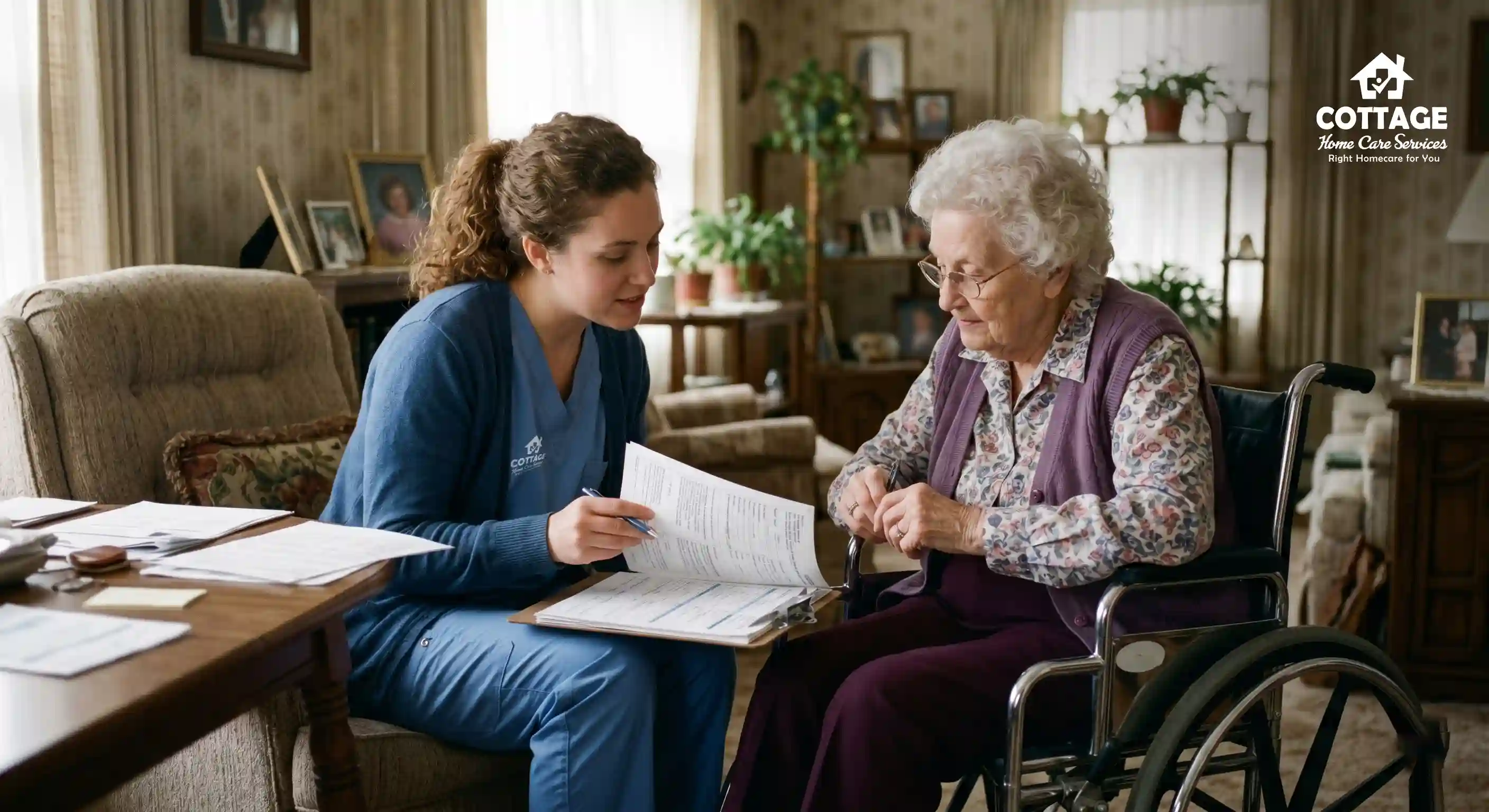
Home care lets your loved one stay in their own home and still get help. Caregivers come to the house to give personal support to seniors or adults with disabilities.
Home care services include:
- Activities of Daily Living (ADLs): Bathing, dressing, grooming, and eating.
- Instrumental Activities of Daily Living (IADLs): Managing money, medications, and household tasks.
- Meal Preparation: Making healthy meals, including favorite Michigan foods.
- Companion Care: Talking, walking, playing games, or going to places like Meijer Gardens, Belle Isle, or Grand Haven State Park.
- Housekeeping & Errands: Cleaning, laundry, shopping, and doctor visits.
Home care gives one-on-one attention, which builds trust and safety. Families can also use respite care for short breaks.
At Cottage Home Care MI LLC, we provide multilingual and cultural matching. We serve families in Detroit, Dearborn, Southwest Detroit, Ann Arbor, Birmingham, Oakland County, and Western Michigan, helping seniors feel comfortable and understood.
What is a Nursing Home (and SNF)?
Some people say "nursing home" or "Skilled Nursing Facility (SNF)." In Michigan, hospitals and insurance often use SNF. These places give 24/7 care for seniors with medical needs.
Nursing homes offer:
- Memory Care: For Alzheimer's or dementia, with wandering prevention, cognitive games, and safe environments.
- Rehabilitation: Physical, occupational, and speech therapy.
- Skilled Nursing: Help with medicines, wounds, and monitoring health problems.
Nursing homes give constant supervision but can feel like an institution. Seniors may lose some independence and privacy. Michigan nursing home costs rose every year from 2024 to 2026 — a trend projected to continue through 2030, according to SeniorLiving.org.
You can compare licensed Michigan nursing homes using the official CMS Care Compare tool at Medicare.gov, which shows quality ratings, inspection results, and staffing data.
Why Home Care May Be Better Than a Nursing Home
- Aging in Place: Seniors stay at home.
- Independence & Comfort: They can make daily choices.
- Customized Care Plans: Care fits their needs. Person-centered care puts your loved one first.
- Flexible Hours & Respite Care: You pick the schedule, including extra hours.
- Cultural Matching: Caregivers speak Arabic, Spanish, Bengali, and other languages.
- Social Support: Companionship reduces loneliness and caregiver stress.
- Emotional Connection: Families avoid guilt from placing a parent in a nursing home.
Picture walking with your parent along the Grand River in downtown Grand Rapids or watching the sunset at Grand Haven State Park, while a trusted caregiver is nearby. That is home care.
Who Needs a Nursing Home?
- Need 24-hour medical help
- Have memory or dementia care needs
- Recovering from surgery or illness
Nursing homes give safety, structure, and access to many medical professionals. They are usually on the higher side of costs — averaging $9,354 to $11,467 per month in Michigan in 2026 — while home care can be lower to moderate, depending on services.
For many Michigan families, the MI Choice Waiver provides nursing-home-level services at home, allowing seniors to avoid facility placement entirely. See the full list of Michigan nursing homes at LARA for facility verification.
How to Pay for Care: Michigan Medicaid & The MI Choice Waiver
Michigan seniors can get help paying for home care through:
- Medicaid Home Help Program – Covers personal care. Eligible families pay $0 out of pocket.
- MI Choice Waiver – Helps pay for in-home and community services. 2026 income limit: $2,982/month for individuals.
- Long-term care insurance – May cover extra services.
Cottage Home Care MI LLC is MDHHS & CHAMPS certified (Provider ID: 6152263), helping families qualify and enroll at no cost.
Hospital to Home: Safe Transitions in Michigan
If your loved one leaves Corewell Health, Trinity Health, or Michigan Medicine, home care helps:
- Meet them at discharge
- Ensure safe travel home
- Set up medicines and monitor recovery
This local knowledge is unique to Michigan providers.
Memory Care Safety at Home
- Door alarms prevent wandering
- 24/7 supervision available
- Cognitive activities like memory games and puzzles
- Family stays involved to keep independence
The Michigan Winter Safety Tip
Winter in Michigan can be harsh. Home care tasks include:
- Clear driveways and paths for emergencies
- Monitor furnace and water pipes
- Encourage indoor activities to prevent cabin fever
The Up North / Cottage Care Advantage
- Help when families travel
- Support seniors at "Lake Life" homes
- Keep "Up North Traditions" alive, like safe docks or porches
- Offer flexible or permanent help
PACE Programs in Michigan
Program of All-Inclusive Care for the Elderly (PACE) helps seniors get full care at home instead of moving to a nursing home. Cottage Home Care MI LLC works with local PACE programs.
Common Mistakes Families Make
- Choosing care only by price
- Ignoring cultural or language needs
- Forgetting respite care
- Not checking MDHHS or CHAMPS
- Forgetting winter safety
How to Choose the Right Care in Michigan
- Check ADLs and IADLs needs
- Confirm certifications: MDHHS, CHAMPS, MI Choice Waiver
- Check caregiver language and culture
- Plan flexible schedules and respite care
- Prepare for hospital transitions
- Compare nursing homes using CMS Care Compare
- Work with local hospitals or PACE programs
- Schedule a free consultation
FAQ
What is cheaper: home care or nursing home in Michigan?
Home care is significantly cheaper. Michigan nursing homes cost $9,354–$11,467/month in 2026. Home care via the Michigan Home Help Program can cost eligible families $0 out of pocket. Even private-pay home care at $25/hour is far less than nursing home rates for part-time needs.
Why is home care better than a nursing home?
It keeps independence, allows aging at home, and gives emotional support. Home care also allows cultural and language matching, flexible scheduling, and family members to be paid caregivers through Medicaid.
Who needs a nursing home?
People with high medical needs requiring 24-hour care, complex wound care, post-surgery recovery, or advanced dementia. Michigan nursing homes can be found and compared at the Michigan LARA website.
What is a care home for young adults?
A place for adults with disabilities who need help with daily life. Michigan's Home Help Program also covers adults under 65 with qualifying disabilities.
Pros and cons of nursing homes?
Pros: 24-hour care, social time, medical staff. Cons: Less independence, institutional feel, higher costs ($9,354–$11,467/month in Michigan 2026).
What do nursing homes provide?
ADL help, skilled nursing, therapy, memory care, meals, and medicine management. Verify quality ratings at Medicare.gov Care Compare.
How much does home care cost in Michigan in 2026?
A home health aide in Michigan charges approximately $25/hour in 2026 (ElderCare Peek). Full-time care (8 hours/day, 22 days/month) totals about $4,400/month. Families qualifying for the Michigan Home Help Program pay $0 out of pocket.
Official Michigan Home Care Resources
Conclusion
Choosing care is personal. Home care offers flexibility, independence, and comfort, while nursing homes give full medical support. In Michigan 2026, nursing homes cost $9,354–$11,467/month — while Medicaid-funded home care costs eligible families nothing. Michigan families benefit from Cottage Home Care MI LLC's local expertise, multilingual care, winter safety, hospital help, and CHAMPS-certified programs.
Call (313) 762-4272, email michigan@cottagehomecare.com, or schedule a free consultation today.
|
|

























Discussion
Leave a Reply