Dementia Care in Michigan: Warning Signs, In-Home Options & Medicaid Help
How to help a loved one with dementia — a Michigan guide
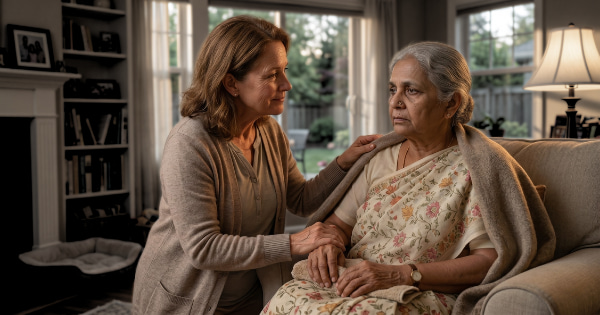
When someone you love starts forgetting familiar faces, missing meals, or getting confused after dark, it changes everything. You watch more closely. You stay up later. You wonder if you're doing enough.
This is the moment most Michigan families start searching for dementia care.
You don't have to figure this out alone. This guide explains what dementia care actually is, when to start it, what types exist, and how in-home support works — clearly, without pressure.
Dementia care is ongoing support for someone with memory loss, confusion, or cognitive decline. It helps them stay safe, follow a daily routine, and live as comfortably as possible — usually at home or in a care setting.
Dementia is not one disease. It's a group of symptoms — memory loss, confusion, personality changes, trouble with daily tasks — caused by conditions like Alzheimer's disease, vascular dementia, or Lewy body dementia.
Dementia care responds to those symptoms. It focuses on:
›Keeping the person safe: fall prevention, wandering risks, medication reminders
›Maintaining a calm, familiar routine
›Helping with personal care: bathing, dressing, eating
›Providing companionship to reduce isolation and anxiety
›Giving family caregivers a real break
This is different from general senior care, which often means helping an elderly person who is physically slowing down but mentally clear. With dementia care, the approach has to adapt to confusion, mood changes, and unpredictable behavior — with patience and a steady hand.
Most importantly: dementia care doesn't have to start in a crisis. It can begin with a few hours of in-home help per week and grow as needs change.
When Does a Loved One Need Dementia Care?
Quick Answer
Your loved one may need dementia care if they are getting lost, missing medications, leaving the stove on, showing personality changes, or if you as the caregiver are exhausted.
You may recognize some of these signs already.
Warning signs to watch for:
!Getting lost on familiar routes or inside the home
!Missing meals or forgetting to eat for hours
!Forgetting medications — or taking them twice
!Unsafe cooking: leaving burners on, forgetting food on the stove
!Poor hygiene: skipping baths, wearing the same clothes for days
!Mood or personality changes — unusual anger, withdrawal, or anxiety
!Wandering, especially at night
!Frequent falls or difficulty moving safely
!Confusion that gets worse after dark (called sundowning)
!Caregiver burnout: you're exhausted, not sleeping, or running on empty
That last one matters as much as the others. Family caregivers who try to do everything alone often reach a breaking point before they ask for help. Getting support isn't giving up. It's a smart decision — for your loved one and for yourself.
If you're seeing three or more of these signs regularly, it's time to look at your options.
Types of Dementia Care
Quick Answer
Dementia care comes in several forms — in-home support, companion care, personal care, respite care, and overnight care. Most families start with a few hours of in-home help and add more over time.
Care Type
What It Includes
Best For
In-home dementia care
Daily support at home: routine help, supervision, personal care
When physical care tasks become hard to manage alone
Respite care
Temporary care so family caregivers can rest
Families who are the primary caregiver
Overnight / 24-hour care
Continuous supervision, especially for wandering
Moderate to advanced dementia
Home Help (self-directed)
An eligible family member registers as an Individual Caregiver and gets paid
Medicaid-eligible individuals who want to self-direct their care
Michigan-Specific Note
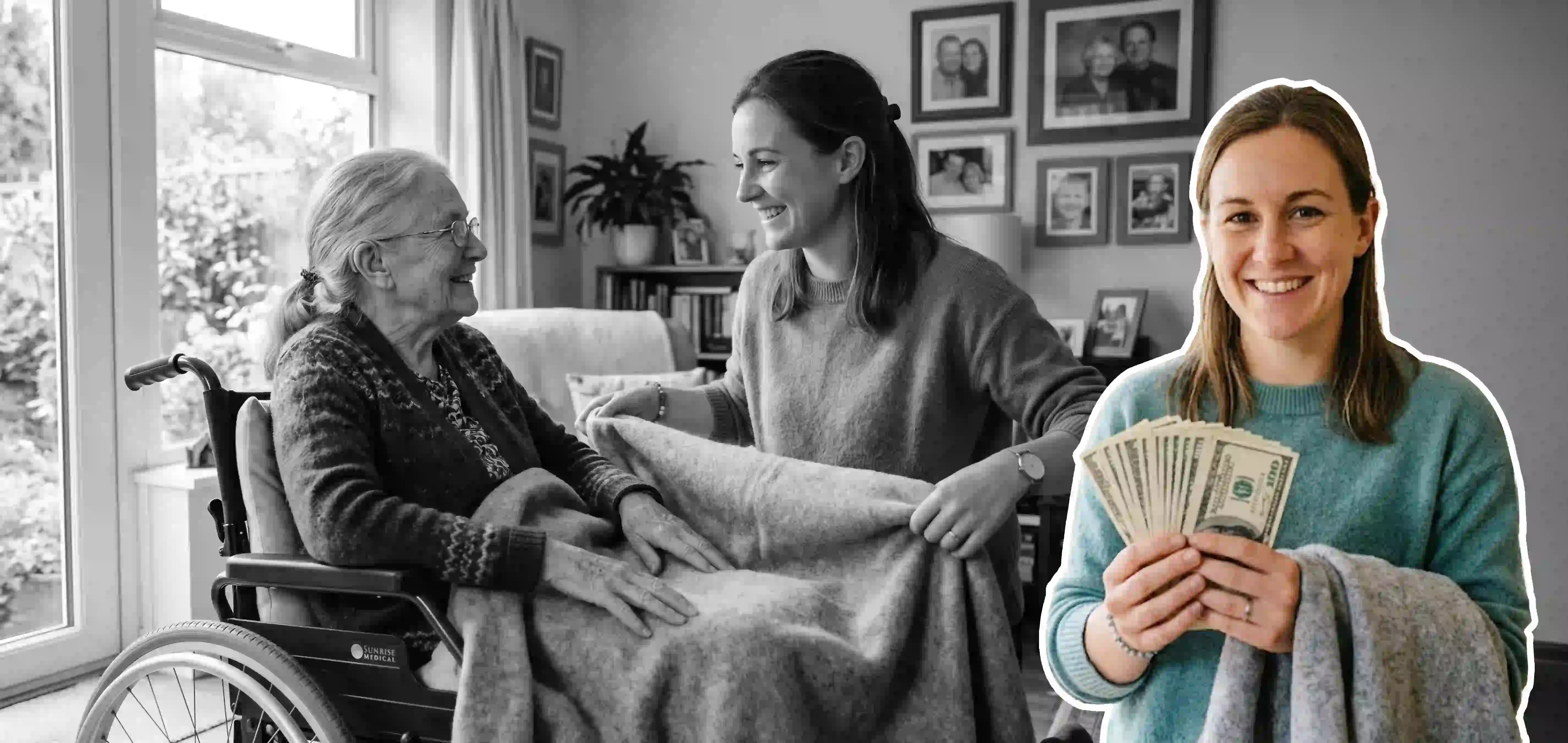
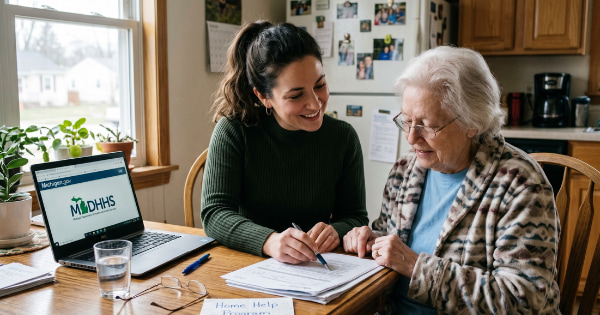
The Home Help program, run by MDHHS, covers personal care assistance for Medicaid-eligible individuals — including those living with dementia. Under the program's self-direction option, you can choose your own caregiver. That means an eligible family member can register as an Individual Caregiver and get paid to provide care at home. Many Michigan families don't know this option exists.
In-Home Dementia Care vs. Facility Care
Quick Answer
In-home dementia care lets your loved one stay in familiar surroundings, which often reduces confusion and anxiety. Facility care may be right when safety needs are too complex to manage at home.
Option
Best For
Pros
Consider
In-home care
Mild to moderate dementia
Familiar home · flexible hours · family involved
Hours may grow over time
Assisted living
Structured daily support needed
Meals · activities · on-site staff
Less personal · may not specialize
Memory care facility
Moderate to advanced dementia
Specialized space · 24/7 staff
Higher cost · less one-on-one
Family-only care
Early stage, strong family network
Low cost · familiar face
Burnout risk · coverage gaps
There's no single right answer. Many Michigan families use a combination — in-home care during the day, family in the evenings and on weekends.
What most families tell us: they wish they'd started in-home care sooner. The transition is much easier when your loved one gets used to a caregiver while they're still calm and comfortable at home.
How Cottage Home Care MI Helps Michigan Families
We work with families across Michigan — from Wayne County to the Upper Peninsula. Our team is Medicaid-certified and MDHHS-approved, which means we can support both private-pay families and those using Michigan's Home Help program.
Companion care.
A caregiver visits regularly, building trust with your loved one. They share meals, go for walks, do simple activities, and keep the day feeling calm and predictable. Many people with dementia do much better when they see a familiar face at the same time each day.
Personal care assistance (PCA).
We help with bathing, dressing, grooming, and mobility. These tasks can become difficult and frustrating when someone has dementia. A trained caregiver handles them calmly and respectfully.
Home Help — self-directed care.
Under the Home Help program, you can self-direct your care, meaning an eligible family member can register as an Individual Caregiver and get paid. We can walk you through the process.
Private pay.
If you're not using Medicaid or prefer a direct arrangement, we can send a caregiver to your door without a lengthy approval process.
Picture This
Your mother is most confused in the mornings. She wakes up disoriented, gets agitated when she can't find familiar things, and sometimes skips breakfast entirely. A caregiver who shows up at 8 AM every day — same person, same time, same calm routine — can change the whole tone of her day. And yours.
Most families start looking for help after a fall, a hospital visit, or a close call at home. Starting earlier makes the transition gentler and gives your loved one time to get comfortable with a caregiver.
Assuming memory loss is harmless.
Forgetting an occasional name is normal aging. But when forgetting starts affecting safety — medications, cooking, wandering — it needs attention now.
Trying to do everything alone.
Family caregivers often feel they should handle everything. Burnout happens quietly, and by the time it's obvious, you're running on empty. There's no reward for doing it without help.
Choosing care based only on price.
Low cost can mean less training, high caregiver turnover, and inconsistent routines — which is particularly harmful for someone with dementia. Ask about specific dementia experience and how they handle behavioral changes.
Ignoring the home environment.
Falls are a leading cause of serious injury in people with dementia. Loose rugs, poor lighting, and unlocked exits are all hazards worth checking today.
Not having a backup plan.
If you're the primary caregiver, what happens if you get sick? Even a simple backup plan — a name, a number, an agency on file — protects your loved one.
Dementia Care Checklist
Use this to assess your situation and get organized.
Home Safety
Daily Routine
Care Support
Emergency Planning
Questions to Ask a Care Provider
Frequently Asked Questions
Dementia care is support for someone with memory loss, cognitive decline, or confusion caused by conditions like Alzheimer's disease or vascular dementia. It includes help with daily routines, personal care, medication reminders, companionship, and safety supervision. It's designed to help the person stay comfortable and safe — usually at home.
As soon as you notice safety concerns or caregiver burnout — not after a crisis. Earlier support means a smoother transition and a more consistent routine, both of which help people with dementia feel calmer. You don't need a formal diagnosis to ask for help.
Yes. In-home dementia care is one of the most common and effective options. A caregiver comes to your loved one's home to help with daily tasks, personal care, meals, and companionship. Staying in a familiar environment often reduces confusion and anxiety.
Dementia care is a broad term — it covers any specialized support for someone with dementia, wherever it's provided. Memory care usually refers to a type of facility (a secured unit or residence) designed specifically for people with moderate to advanced dementia. In-home dementia care and memory care facilities are both forms of dementia care.
The 4 R's are a caregiving framework: Reassure (provide calm, consistent reassurance), Redirect (gently steer away from confusion or distress), Reconsider (adjust your approach when something isn't working), and Recollect (use familiar memories and routines to help ground the person). These principles are used by trained dementia caregivers to reduce agitation and support daily functioning.
Common signs include: getting lost on familiar routes, missing meals or medications, unsafe use of the stove, poor hygiene, wandering at night, increased agitation or confusion, and frequent falls. If any of these are happening regularly, it's time to talk with a care provider.
It depends on the stage of dementia and your loved one's needs. In-home care is often better for mild to moderate dementia because familiar surroundings help reduce confusion. Facilities may be more appropriate for advanced dementia when safety can't be managed at home. Many families use in-home care first and transition to a facility only if needed.
Michigan's Home Help program covers personal care assistance for Medicaid-eligible individuals, including those with dementia. Under the program's self-direction option, you can self-direct your care — meaning an eligible family member can register as an Individual Caregiver and get paid. Cottage Home Care MI is MDHHS-approved and can help you understand your eligibility.
It gives you a break — real rest, not just an hour here and there. Respite care, companion visits, and in-home personal care reduce caregiver burnout, which is one of the most serious risks for families in this situation. When you're less exhausted, you're also a more patient and present caregiver.
Ask: Do caregivers have specific dementia training? How do you handle agitation or behavioral changes? What happens if a caregiver can't show up? Do you accept Medicaid or work with the Home Help program? Can we start with a small number of hours and add more over time? These questions will help you see quickly whether a provider is the right fit.
Ready to Talk?
You don't have to figure this out alone.
Dementia doesn't come with a roadmap. Most families figure it out as they go — often after they've already been stretched too thin. But it doesn't have to get to that point.
A few hours of in-home support, a reliable caregiver who shows up consistently, a family member who finally gets some rest — these small things can change the whole picture.
Medicaid-certified · MDHHS-approved · Fully insured in the State of Michigan















Discussion
Leave a Reply